
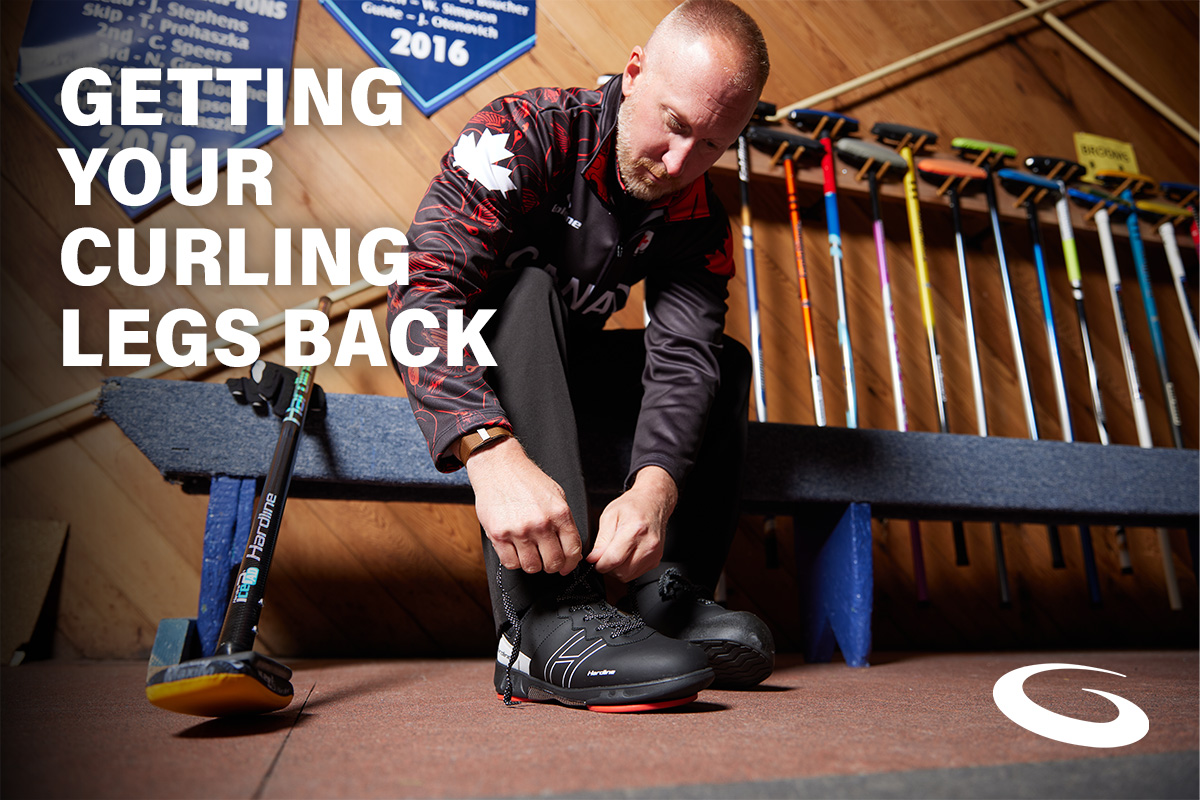
The start of curling season is one of the best times of the year. You’re back at the club, back with your team, and finally back on the ice.
But there’s one small catch: your body is still remembering how to curl, and the ice can have a bit of an early-season personality of its own.
Early in the season, we’re often still dealing with warm days outside. You might leave work in 20-degree weather, drive to the club with the heat trapped in your car, grab your curling shoes from the back seat and head straight onto the ice.
Then suddenly… everything feels slippery.
That’s shoulder-season curling.
Warm Outside Can Mean Different Ice
Curling clubs work incredibly hard to maintain good ice, but when outdoor temperatures are still fluctuating, the conditions inside the building can be a little different too.
You may hear curlers describe early-season ice as “green,” “slick,” or “greasy.”
Your slider is obviously designed to slide, but your gripper relies on friction. When the ice, your shoes and your gripper are all adjusting to temperature, things can feel very different than they do in the middle of January.
And remember, it has probably been a few months since your own body was used to walking around on curling ice too.
Rule #1: Don’t Leave Your Curling Shoes Baking in the Car
This is such an easy one.
If your curling shoes and grippers have been sitting in a warm car all afternoon, don’t throw them on and immediately run onto the ice.
Those babies need to cool down.
Give yourself a little extra time when you arrive at the club. Put your curling shoes on, let them adjust to the cooler environment and give the soles and grippers a chance to come down in temperature.
Once you step onto the ice, stand there for a moment. Let your shoes and gripper acclimate before you start moving quickly.
It only takes a few extra minutes, and those few minutes are worth it.
Your Body Needs a Few Minutes Too
Your curling shoes aren’t the only thing coming back from summer vacation.
So are you.
Curling uses a surprisingly specific group of muscles. Your hips, glutes, hamstrings, quads, core, shoulders and back all get involved in ways they probably haven’t for a few months.
Give yourself time before the game to move, stretch and warm up.
A few gentle lunges, leg swings, shoulder movements and stretches can help remind your body what you’re about to ask it to do.
And take those first few slides slowly.
You do not need to prove anything on your first delivery of October.
Be Patient With Yourself
One of the easiest ways to get hurt at the beginning of the season is simply trying to pick up exactly where you left off in April.
Your balance may feel a little off.
Your delivery might feel stiff.
Your sweeping muscles may complain.
You might wake up the next morning and discover muscles you apparently forgot existed.
That’s pretty normal after some time away.
Give yourself a few games to settle back in.
The Shoulder-Season Checklist
When you head to the club during those first few weeks of the season:
- Don’t leave your curling shoes and grippers cooking in a hot car.
- Give your equipment time to cool down.
- Let your shoes and gripper come to ice temperature before moving quickly.
- Warm up and stretch before you play.
- Take your first few trips across the ice slowly.
- Remember that early-season ice may feel slicker than you expect.
- Give your body a few games to remember what curling feels like.
- Expect that you might be a little sore afterward.
Most importantly, give yourself some patience.
You’ve been waiting all summer to get back on the ice. You don’t have to get all of your curling legs back in the first five minutes.
The season is just getting started. 🥌
Great comments for health safety when
on the ice
Patience and pausing when stepping on and stepping on the ice, in the hack and off the ice.
👍👍 from Leaside cc physiotherapist